
 9 Minutes
Standing inside a 600-year-old mausoleum in Turkistan, it's hard to believe that many travelers still see Kazakhstan as a purely modern destination. Long before Astana's skyline appeared and long before Almaty became a tourism hotspot, merchants, pilgrims, and conquerors were crossing these lands through the Silk Road.
Today, their stories survive in ancient cities, sacred shrines, archaeological sites, and some of the most fascinating historical places in Kazakhstan.
AED 2,499
per person
If you are exploring Kazakhstan tour packages, understanding its history can completely transform your travel experience.
Kazakhstan's history stretches back thousands of years. Its location in Central Asia made it a crucial crossroads on the Silk Road, connecting China, the Middle East, and Europe. Merchants, scholars, and travelers passed through its cities, bringing trade, culture, and new ideas.
The region was shaped by Turkic tribes, nomadic civilizations, and later the Kazakh Khanate, which played a major role in forming the country's identity. Islamic influences introduced remarkable religious architecture, while the Russian Empire and Soviet Union left their own mark on Kazakhstan's culture and cities.
Since gaining independence in 1991 from the Russian Empire, Kazakhstan has invested heavily in preserving its heritage. Today, cultural tourism is growing rapidly, attracting visitors who want to explore some of the most significant historical places in Kazakhstan alongside the country's modern attractions.
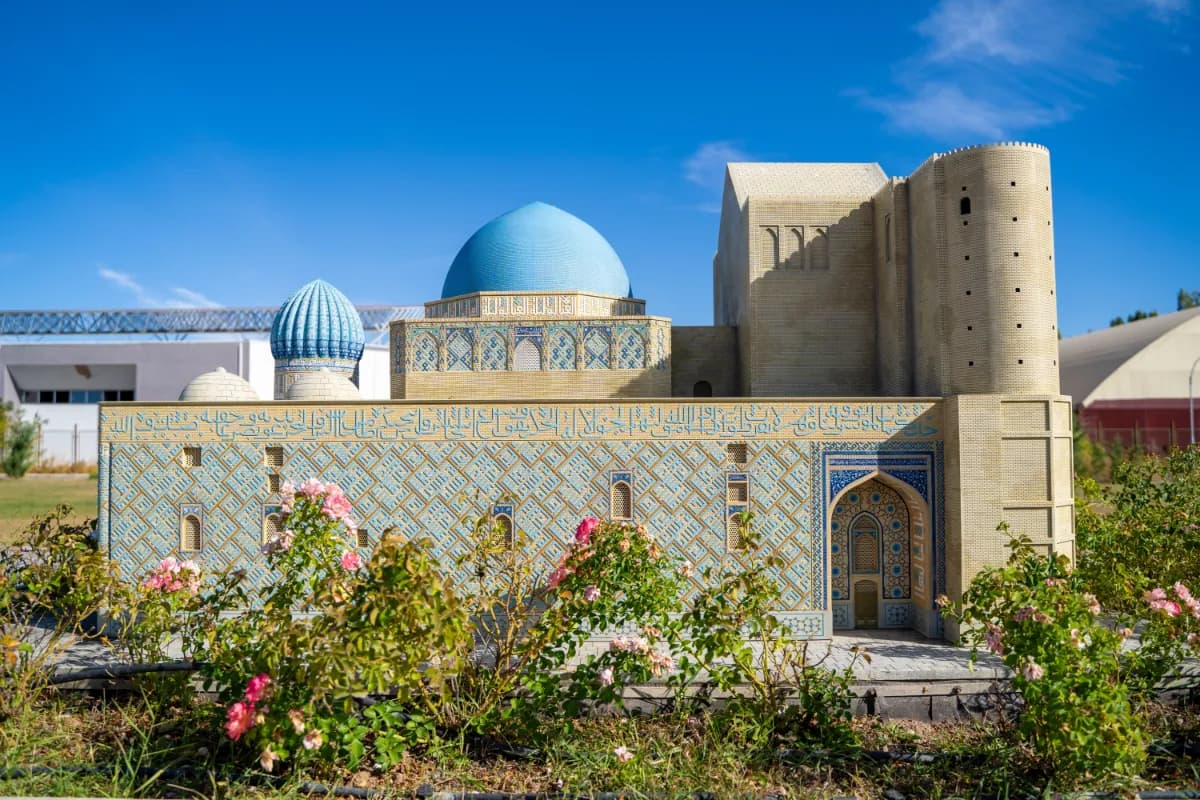
Kazakhstan's first UNESCO World Heritage Site, inscribed in 2003. The city of Turkistan is often called the spiritual heart of Kazakhstan, and its most famous landmark is the Mausoleum of Khoja Ahmed Yasawi. Built in the late 14th century under the orders of Timur, the monument remains one of Central Asia's greatest architectural achievements.
The massive turquoise dome can be spotted from afar, but the real beauty lies in the intricate tilework, grand halls, and peaceful courtyards. Walking through the complex feels like stepping into a chapter of Silk Road history. Visitors often notice how calm and reflective the atmosphere remains despite its popularity.
Entry Fee: Approximately AED 15
Visiting Hours: 9:00 AM – 6:00 PM/7 PM on Tuesdays.
Long before modern Kazakhstan emerged, Otrar was one of the most prosperous historical places in Kazakhstan, as it was once a trading center on the Silk Road. It was here that merchants exchanged goods, cultures, and ideas between East and West.
Today, visitors can explore the ruins of streets, walls, and ancient structures that hint at the city's former importance. Standing among these remains gives a rare perspective on how advanced Silk Road settlements once were.
Unlike polished monuments, Otrar offers something more raw and authentic. It is the kind of place where history enthusiasts can truly imagine the past unfolding around them.
Entry Fee: Free
Visiting Hours: Daily from 9:00 AM – 5:00 PM
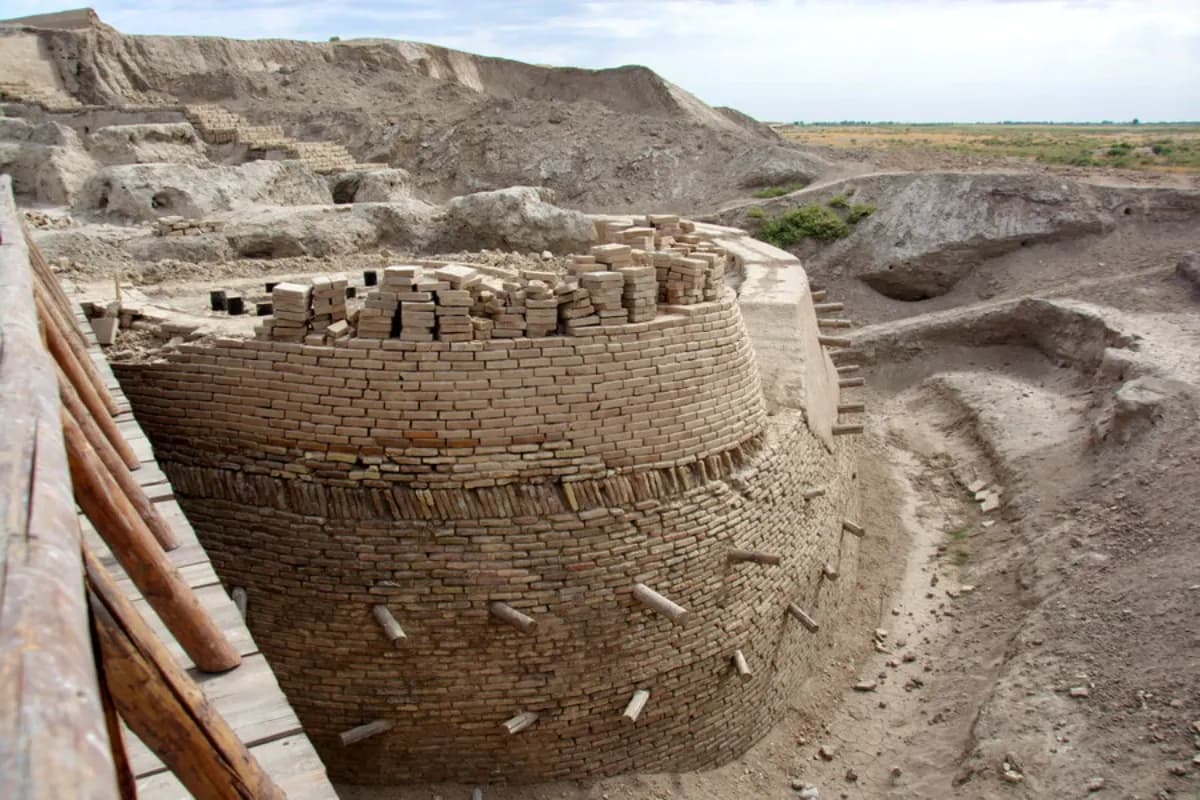
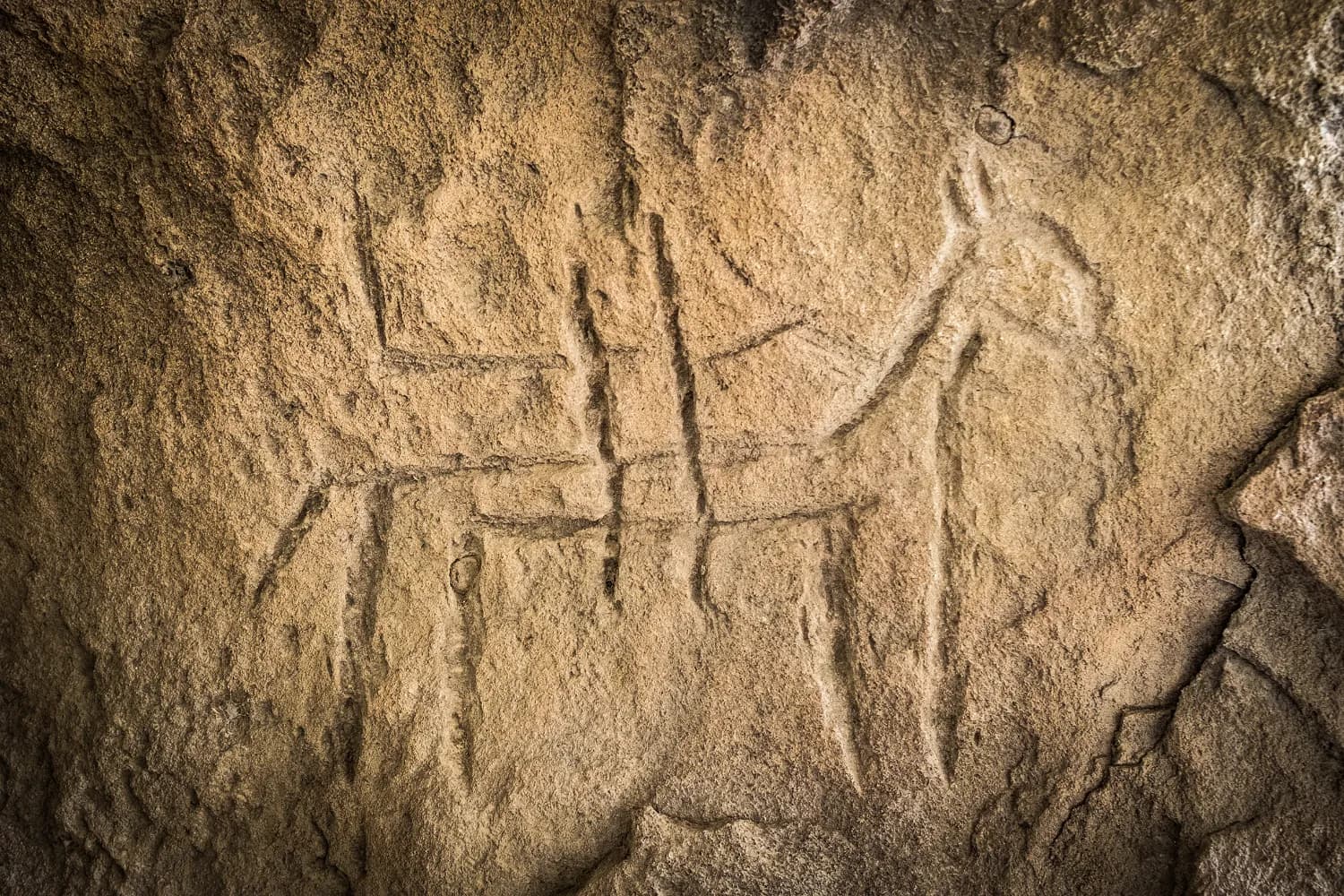
Just a few hours from Almaty lies one of Kazakhstan's most extraordinary archaeological sites. Officially listed as Petroglyphs of the Archaeological Landscape of Tanbaly.Tamgaly is a UNESCO World Heritage Site, and is home to thousands of rock carvings dating back more than 3,000 years.
The images depict hunters, animals, rituals, and mysterious sun-headed figures. These carvings provide valuable insights into the spiritual beliefs and daily lives of ancient communities.
Visitors typically enjoy walking through the open landscape while discovering new carvings along the route. It feels less like visiting a museum and more like exploring a hidden outdoor gallery created by ancient civilizations.
Entry Fee: Approximately AED 15
Visiting Hours: Open 24x7
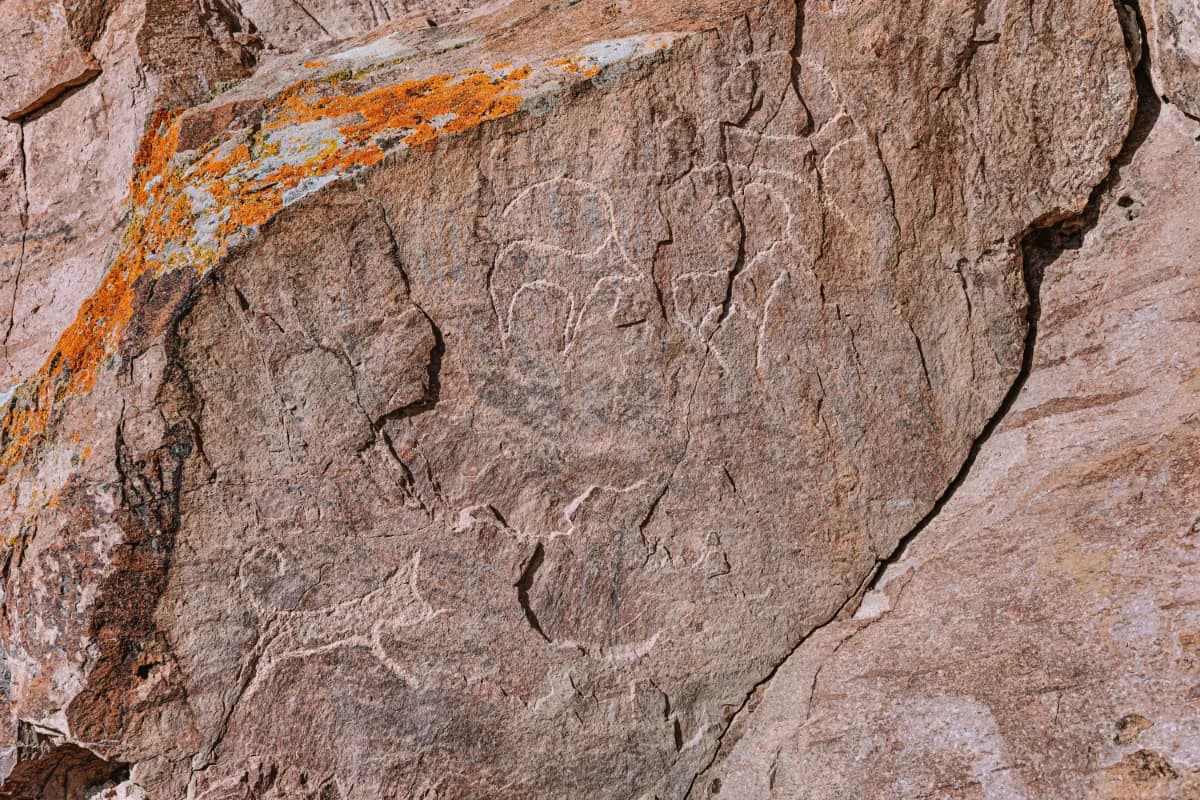
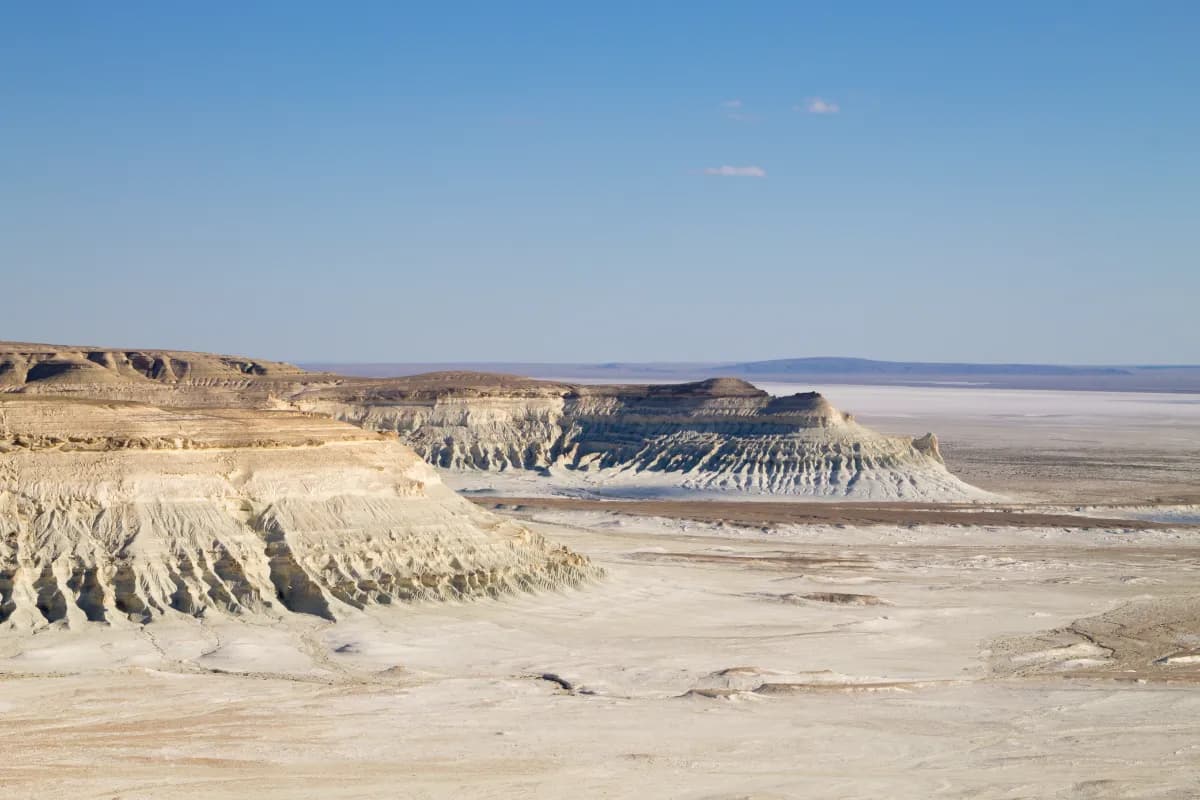
It’s a combination of adventure and historical places to visit in Kazakhstan. The Beket Ata Underground Mosque is one of Kazakhstan’s most sacred spiritual sanctuaries and an architectural marvel. Carved directly into the remote chalk cliffs of the Oglandy tract on the edge of the Ustyurt Plateau, this subterranean complex has served as a major pilgrimage site for Sufi Muslims since the 18th century.
Located in the Mangystau Region of Western Kazakhstan, roughly 280–290 kilometres east of the coastal city of Aktau. After reaching the visitor complex at the top of the plateau, you must descend a steep, 1.5-kilometre winding staircase down a 200-metre cliff face into the gorge. The hike takes roughly 30 minutes to go down and longer to climb back.
Entry Fee: Free
Visiting Hours: Daily from 9:00 AM until sunset
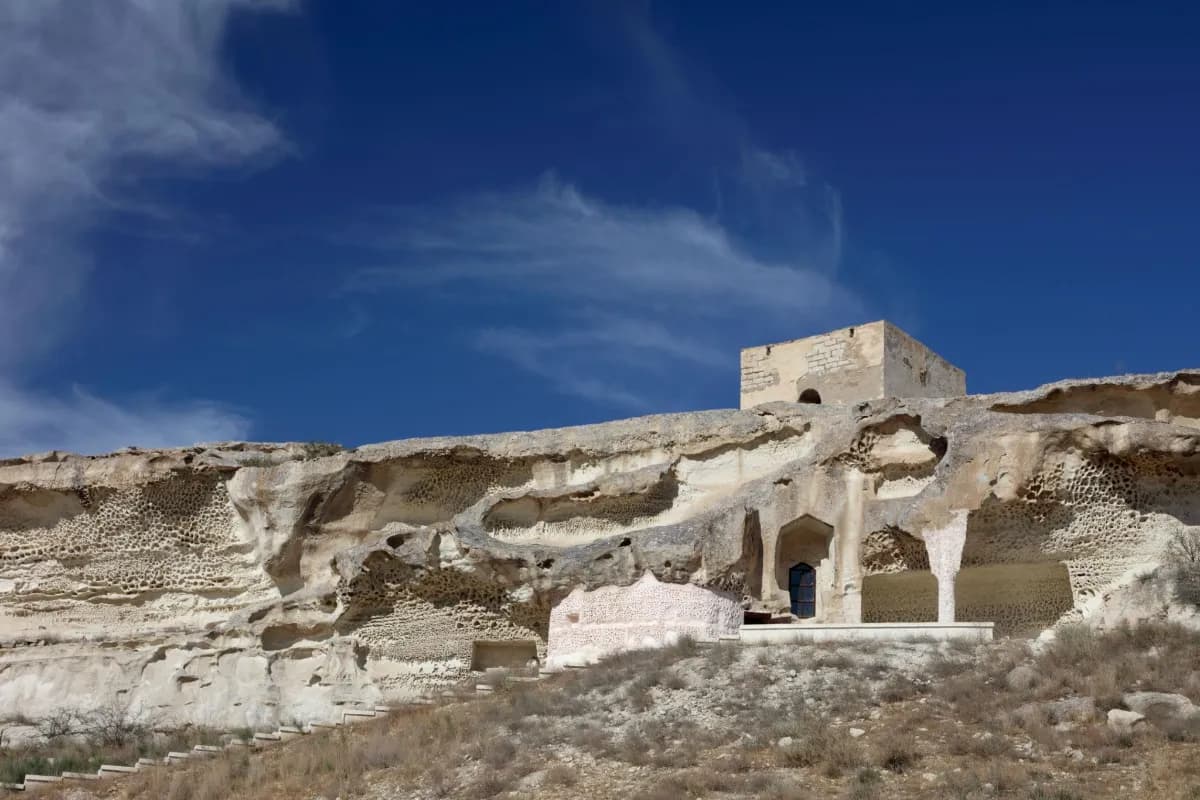
Akyrtas proves that some of history’s greatest attractions are not defined by what we know, but by what we still don't. Few sites in Kazakhstan generate as much curiosity as Akyrtas. Historians still debate why this massive stone complex was built and whether it served as a palace, monastery, or military fortress.
The huge red sandstone blocks immediately stand out, especially against the surrounding landscape. As visitors walk among the remains, the unanswered questions only add to the site's appeal.
Entry Fee: Free/nominal sometimes(check official website for recent updates)
Visiting Hours: Open attraction (sunrise to sunset)
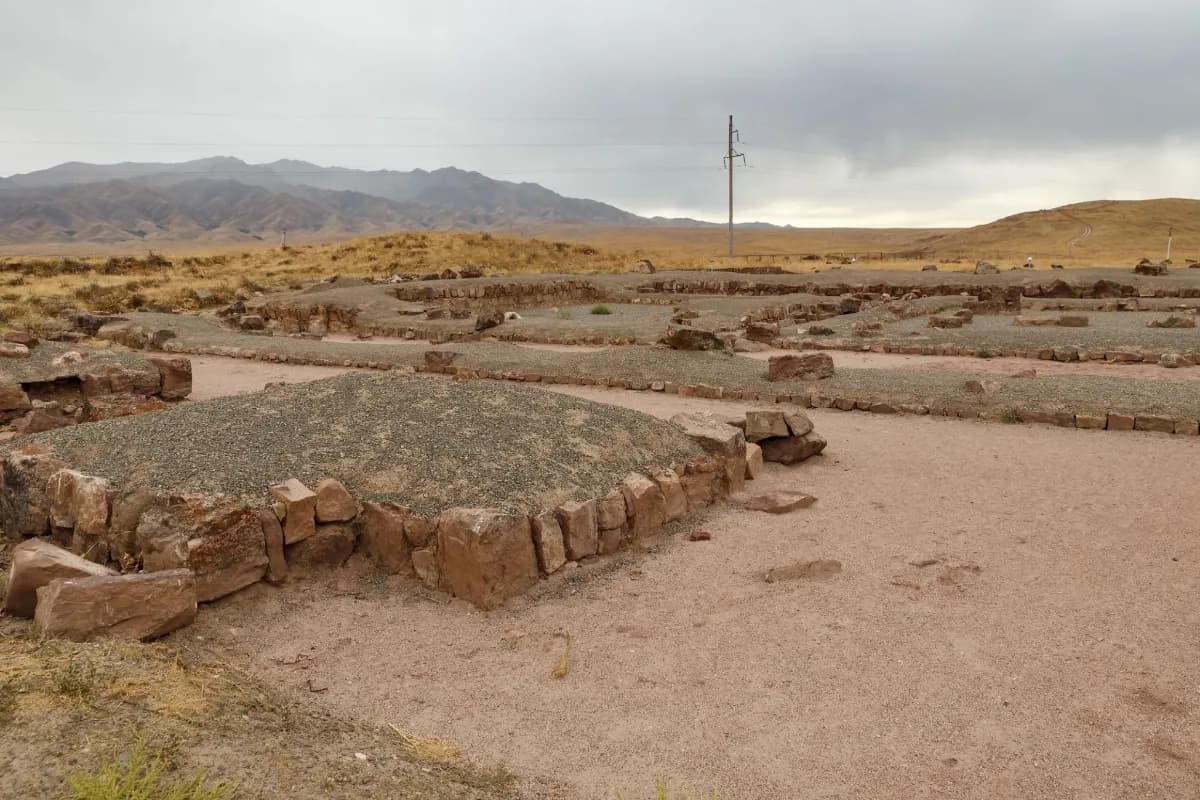
Dating back to the 11th–12th centuries, the Aisha Bibi Mausoleum is a UNESCO World Heritage site located 18 km west of Taraz, Kazakhstan. Often called the "Pearl of Taraz," it is renowned for being the only architectural monument in Central Asia fully clad in intricately carved terracotta tiles.
Unlike many historical places in Kazakhstan associated with rulers and wars, Aisha Bibi is linked to a famous love story. According to local legend, Aisha Bibi, a noble young woman, traveled across the steppe to meet her beloved Karakhan. Just before reaching him, she was bitten by a snake and died. Heartbroken by her loss, Karakhan built the Aisha Bibi Mausoleum, which remains a symbol of eternal love in Kazakhstan.
Entry Fee: AED 1 - 2
Visiting Hours: 9:00 AM – 6:00 PM
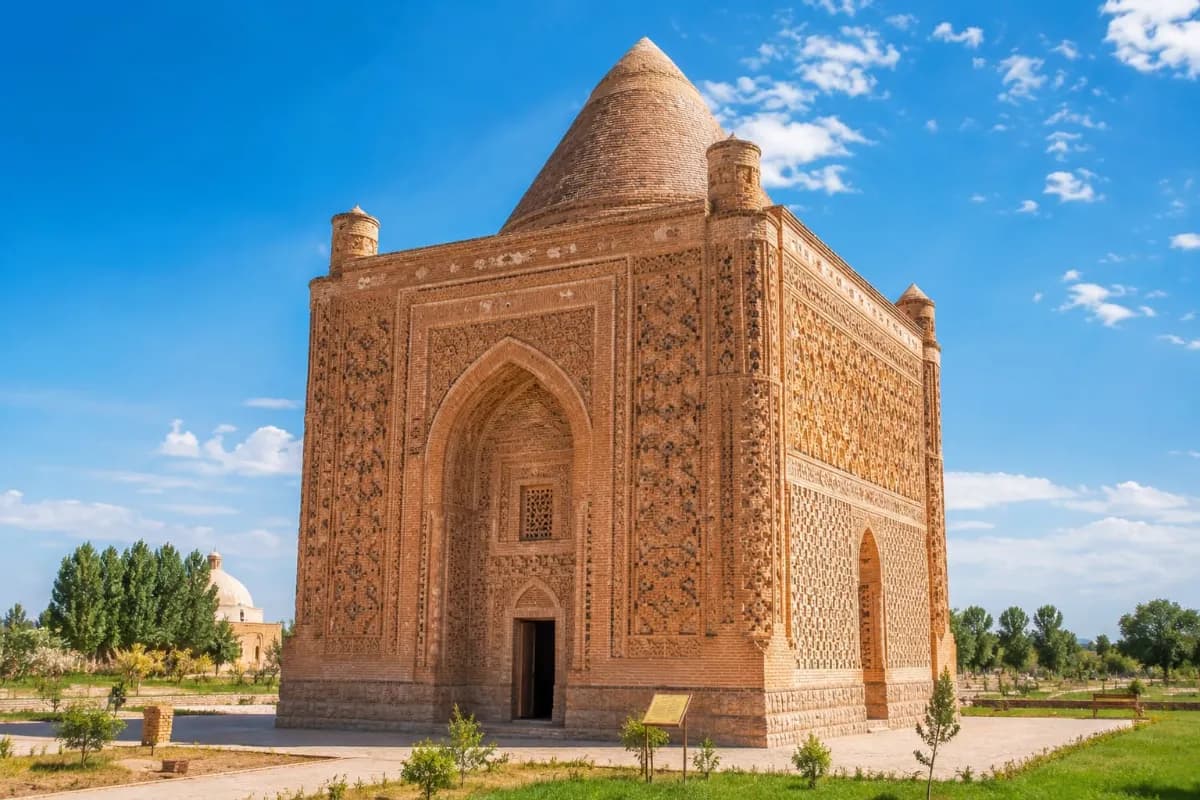
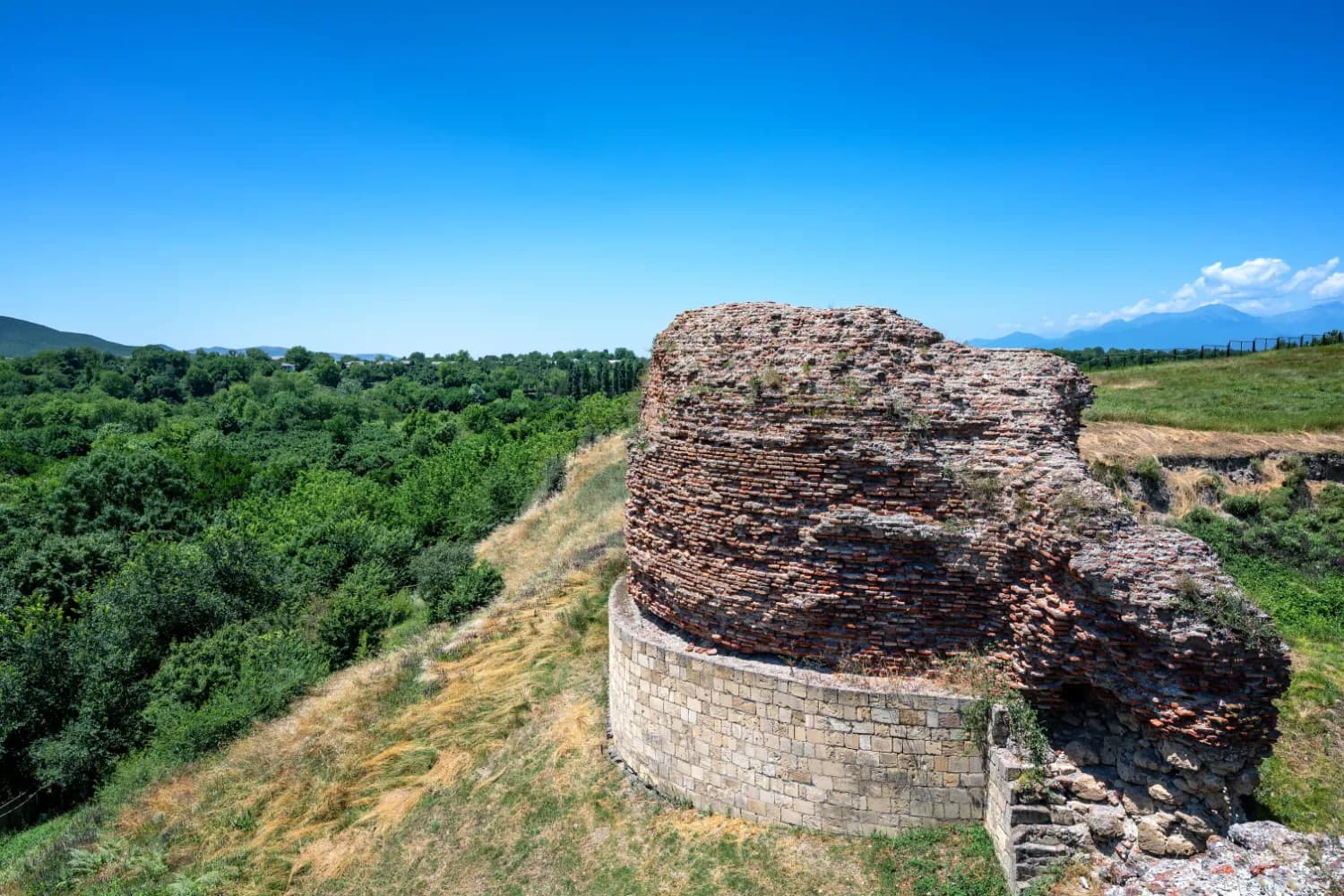
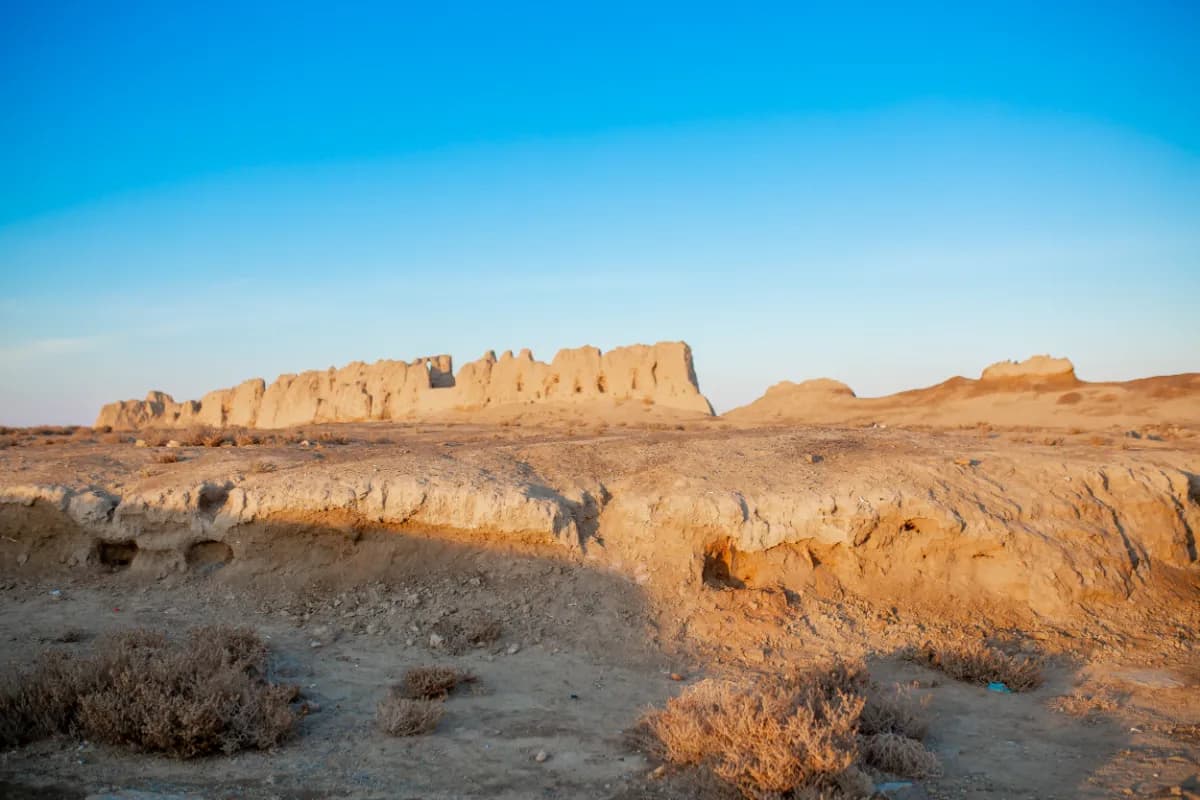
At first glance, Sauran appears to be a quiet archaeological site. However, centuries ago, it was one of the largest fortified cities in the region.
The Ancient City of Sauran (also spelled Sawran) is Kazakhstan’s best-preserved medieval fortress and one of the most remarkable archaeological gems along the historic Silk Road. Located in the desolate steppe of Southern Kazakhstan, the site offers a hauntingly beautiful, raw glimpse into the past without the heavy commercial restorations found at other global monuments. It is currently recognized on the UNESCO World Heritage tentative list as part of the Silk Roads: Fergana-Syrdarya Corridor.
Entry Fee: Free
Visiting Hours: 9:00 AM – 6:00 PM
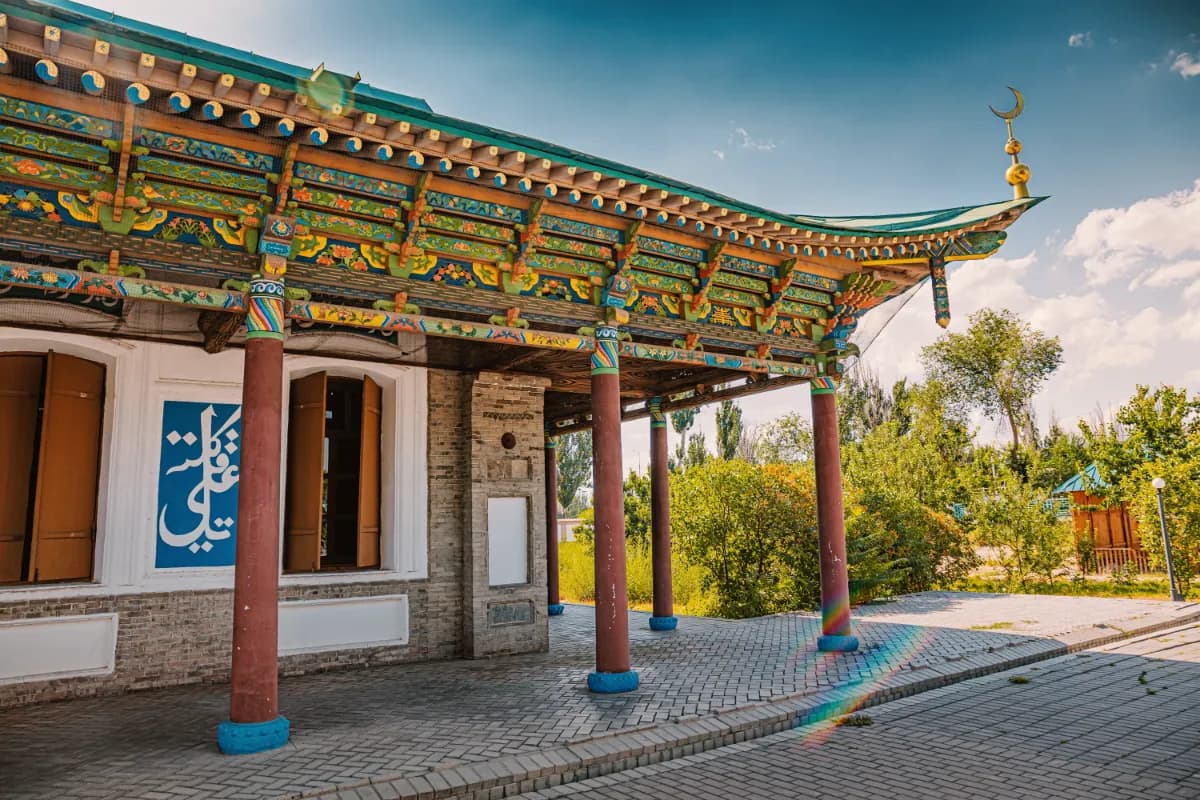
One look at Zharkent Mosque and you'll immediately notice that it differs from traditional Islamic architecture. Built in the late 19th century, It is one of the most historical places to visit in Kazakhstan as this mosque blends Central Asian design with Chinese architectural influences.
The Zharkent Mosque in Zharkent, Kazakhstan, is an extraordinary 19th-century architectural marvel. Bing seamlessly blends Chinese pagoda styling with Central Asian Islamic architecture. Visually striking, the building looks like a Buddhist or Taoist temple. Yet, it serves as a historic sanctuary for the region's Muslim community.
Entry Fee: Approximately AED 5
Visiting Hours: 9 am–1 pm, 2–6 pm
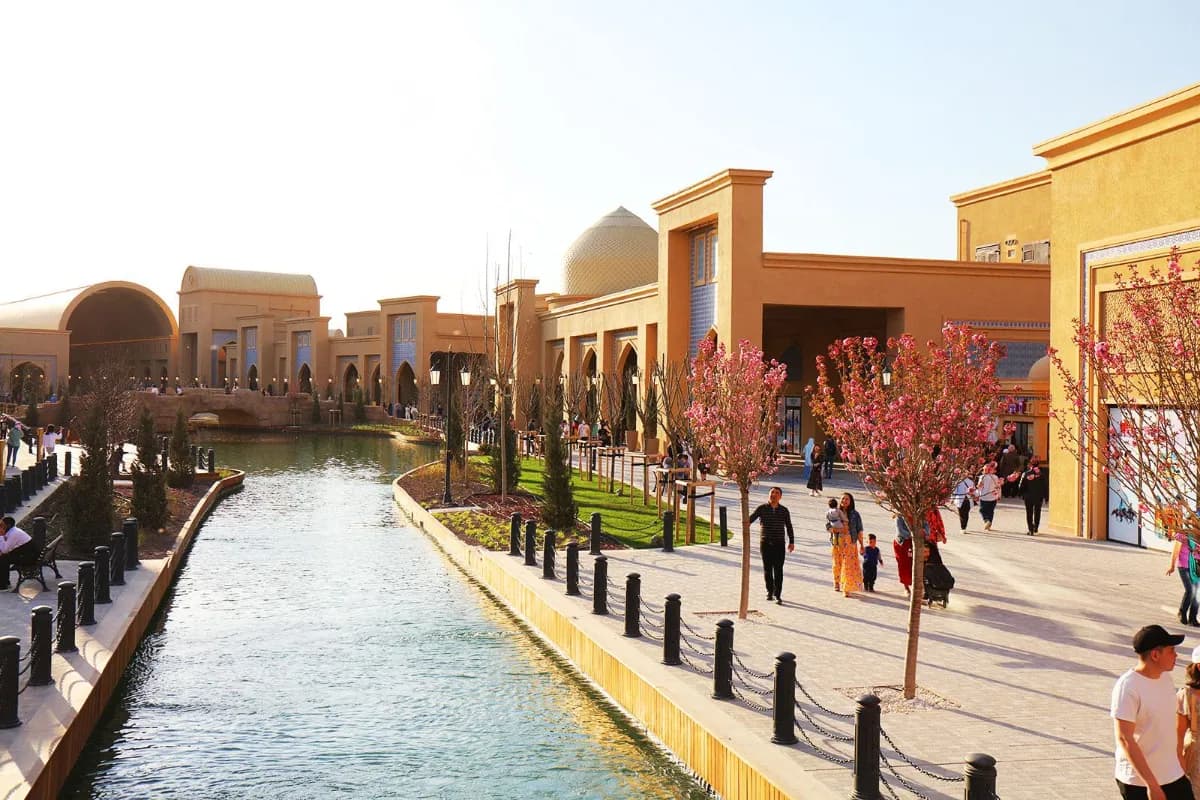
The Karavan Saray Tourist Complex in Turkistan, Kazakhstan, is an expansive, $200 million cultural and entertainment destination designed to resemble an ancient Silk Road trading hub. Spanning over 74,000 square meters, this massive pedestrian-oriented development is often nicknamed the “Venice of the Sands” because its modern shops, high-end hotels, and traditional Central Asian architecture are built entirely around an artificial lake and winding canal system.
Located at 56 Alkhodzha Ata, the area sits in the absolute center of the city's historical district, making it incredibly accessible for tourists.
Entry Fee: Free
Visiting Hours: 10:00 AM – 8:00 PM
Mangystau is often described as Kazakhstan's open-air museum. Scattered across its rugged landscape are sacred shrines, ancient cemeteries, and historical monuments connected to the country's nomadic traditions.
The Mangystau region of western Kazakhstan - often called the “Land of 362 Saints” - contains a massive network of over 11,000 historical and cultural monuments. Most notable among these are its medieval rocky underground mosques and expansive ancient necropolises. Five of these sacred structures have been placed on the UNESCO Tentative List of World Heritage Sites.
Travelers seeking lesser-known historical places to visit in Kazakhstan often rank Mangystau among their highlights.
Entry Fee: Free but varies by site
Visiting Hours: Generally daylight hours
Well, if you are interested in understanding Kazakhstan history, these historical places in Kazakhstan showcase the country's remarkable journey through time explaining how the history of Kazakhstan affected its culture, architecture, and overall civilization.
If Kazakhstan is on your travel list, now is an excellent time to explore before it becomes a mainstream destination. Speak with Viacation to discover curated Kazakhstan tour packages that combine iconic attractions, authentic cultural experiences, and the country's most fascinating historical landmarks.
Famous landmarks in Kazakhstan include the Mausoleum of Khoja Ahmed Yasawi, Aisha Bibi Mausoleum, Tamgaly Petroglyphs, Otrar Ancient Settlement, and Astana's modern attractions.
The Mausoleum of Khoja Ahmed Yasawi in Turkistan is considered Kazakhstan's most important historical site due to its UNESCO status and cultural significance.
Yes, Kazakhstan has several UNESCO World Heritage Sites, including the Mausoleum of Khoja Ahmed Yasawi and the Tamgaly Petroglyphs archaeological landscape.
Otrar and Sauran were major Silk Road cities in Kazakhstan, serving as important trade and cultural centers connecting Asia and Europe.
Yes, Kazakhstan offers ancient cities, mausoleums, archaeological sites, and Silk Road heritage, making it an excellent destination for history enthusiasts.
June 3, 2026
May 30, 2026
May 29, 2026
May 26, 2026
May 26, 2026